Key takeaways
- Diners choose on photos and short video, so real, recent, mouth-watering content is the core of restaurant marketing.
- Google Maps and Instagram do most of the work for walk-ins; your website wins bookings, functions and catering.
- Process video (the grill, the pour, the noodles being pulled) usually outperforms finished-plate photos.
- Consistency beats bursts. A monthly shoot keeps the feed in step with the menu.
Perth’s food scene is crowded and getting more competitive every year. The good news is that hospitality is the industry where great content makes the biggest difference. People eat with their eyes before they ever sit down.
Many of our clients are in hospitality, from Kanpai Yakiniku to Bariuma Ramen to At Adel’s. This guide covers what we’ve seen work for Perth restaurants and cafés, and a simple monthly rhythm you can follow.
How Perth diners choose where to eat
Most decisions happen on a phone, in a few minutes:
- A search or a scroll. “Ramen Victoria Park”, “brunch near me”, or a reel that turns up in their feed.
- Google Maps. Star rating, recent reviews, photos, opening hours, how far away you are.
- Instagram. Does the food look as good as the reviews say? Does it look like their kind of place?
- The website. For bookings, functions, menus and anything bigger than a quick meal.
Every step is visual, and every step is a chance to lose them to the place down the road.
1. Photos sell the table
When someone’s deciding where to eat tonight, they scroll photos. Yours need to be real, recent and make people hungry. Phone photos under kitchen lights don’t compete with the venue that invested in a proper shoot.
That doesn’t mean over-styled. The best hospitality photos look like the best version of a real night at your venue: good light, the dish at its peak, people enjoying it.
2. Video beats the finished plate
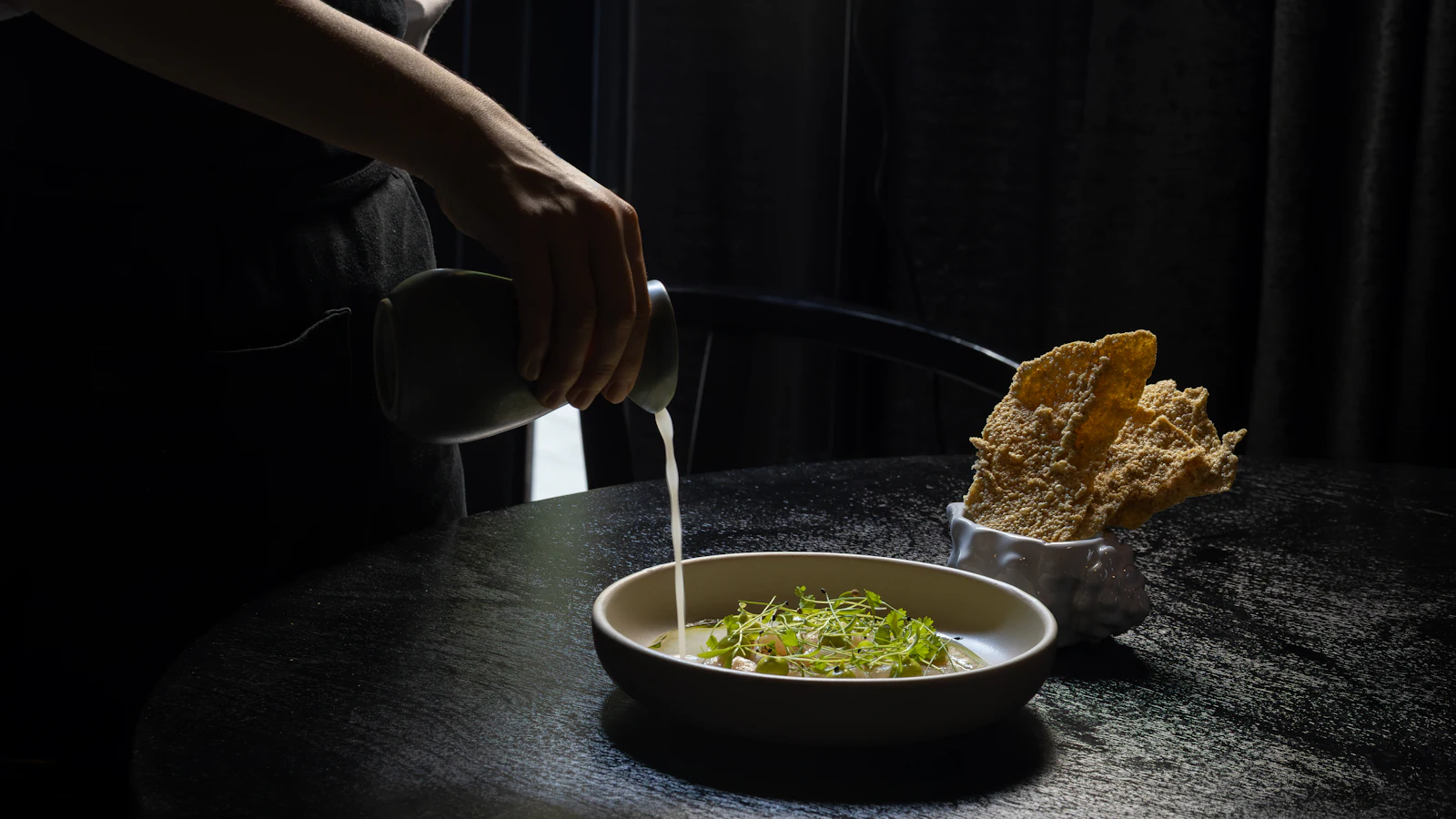
The finished dish is good. The flame on the grill, the noodles being pulled, the sauce pour and the first cut are what stop the scroll. Process video makes people feel what it’s like to be there, and short-form video is what Instagram and TikTok put in front of new people.
You can see it in our Bariuma Ramen case study: 477K+ organic views and 1,131 new followers across two location launches, built on short, process-led video.
3. Google Maps is your front door
For walk-ins and “near me” searches, your Google Business Profile often does more work than your website.
- Hours: keep them right, especially public holidays and seasonal changes. Wrong hours lead to angry reviews.
- Photos: add new ones every month, food, space and team.
- Menu: link your current menu, or add it directly.
- Reviews: reply to all of them, good and bad, briefly and personally.
- Attributes: outdoor seating, vegetarian options, wheelchair access, bookings. Fill in everything that applies.
Our Google Business Profile setup guide walks through it step by step.
4. Your website wins bookings and functions
Your website still matters for the bigger decisions: group bookings, functions, private dining, catering and gift vouchers.
- Make the menu readable on a phone. Not a blurry PDF.
- Put the booking button at the top of every page.
- Show the space, especially for functions: capacity, layout, packages.
- Add your address, parking and public transport, and opening hours that match Google.
- Have a clear page for functions and events with an enquiry form.
5. Keep the feed in step with the menu
New seasonal dish? Special event? Changed opening hours? If it’s not on your socials, it didn’t happen. A monthly content shoot means the content always matches what’s actually on the menu, instead of photos of dishes you stopped serving last winter.
6. Let your people show
Your chef, your floor staff, your regulars. Hospitality is personal, and people come back to places that feel like they know them. Behind-the-scenes clips of prep, staff favourites and the story behind a dish give people a reason to care. At Adel’s introduced a relocated family kitchen to a new city this way, with 124K views in its first 90 days.
7. Use launches and events
Openings, new menus, seasonal specials, collaborations and events are natural content peaks. Plan them a month ahead so you can tease, launch and recap. This is also where a small ad budget behind your best video, or a local food creator, can give you a useful boost.
What to post: ideas that work for Perth venues
- The signature dish, made from start to finish
- “What [dollar amount] gets you” at your venue
- Chef or owner explaining one dish in 20 seconds
- A busy service, sped up
- New menu item reveal
- Staff picks
- Regulars and their usual order (with permission)
- The story behind the venue or a recipe
- Behind the scenes of prep before opening
- Events, functions and private dining setups
A simple monthly rhythm for a Perth venue
| When | What |
|---|---|
| Week before | Plan next month around the menu, events and what performed last month |
| Week 1 | Monthly shoot: new dishes, team, space, process clips |
| Weeks 1 to 4 | Three to five posts a week, mostly short video |
| Every week | Stories from service, replies to comments and reviews, a new Google photo |
| End of month | Check what worked and plan the next shoot around it |
Common mistakes
- Posting only finished plates on a white table.
- Bursts of posting around openings, then silence.
- A menu that only exists as a PDF.
- Hours on Google that don’t match the door.
- Ignoring reviews, or arguing with them.
- Boosting posts before the content is good.
Want your feed to look as good as your food? See our social media plans, or Get Online™ for your website and socials together.
FAQs
What's the best way to market a restaurant in Perth?
Get the basics right first: an accurate Google Business Profile with recent photos and replies to reviews, an Instagram feed full of real food and people, and a website with a readable menu and an obvious booking button. Then stay consistent every month.
How often should a restaurant post on Instagram?
Three to five posts a week is plenty if the content is strong, mostly short video, with stories in between to show service and specials.
Should restaurants pay for ads?
Once the organic content is good, a small ad budget behind your best videos works well for openings, launches and events. Ads behind weak content just spread weak content further.
Do restaurants still need a website?
Yes. Walk-ins often decide on Google Maps and Instagram, but group bookings, functions, private dining, catering and gift vouchers usually go through your website.
Should a restaurant work with influencers?
Local food creators can bring a burst of new diners, especially for openings. Choose creators whose audience is actually in Perth, and treat it as a boost on top of your own content, not a replacement for it.